






















Salty air fills your nose, and you open your eyes to witness a pod of large black-and-white creatures gliding through the waves as if they were one. Surfacing to breathe, moving calmly and precisely, you see the beautiful intellectual ruler of the sea, an orca.
Living on the coast with the ability to feel sand beneath your feet in minutes, you are connected to nature. When you witness its beauty, remember who gifts your eyes with it. To see a killer whale is a magnificent thing, especially when you know more about what you’re truly looking at, a creature with emotions like yours, yet lacking an understanding. Often seen only as brutal killers, Orcas are very unrecognized for their positive influence and the threats they face from humans.
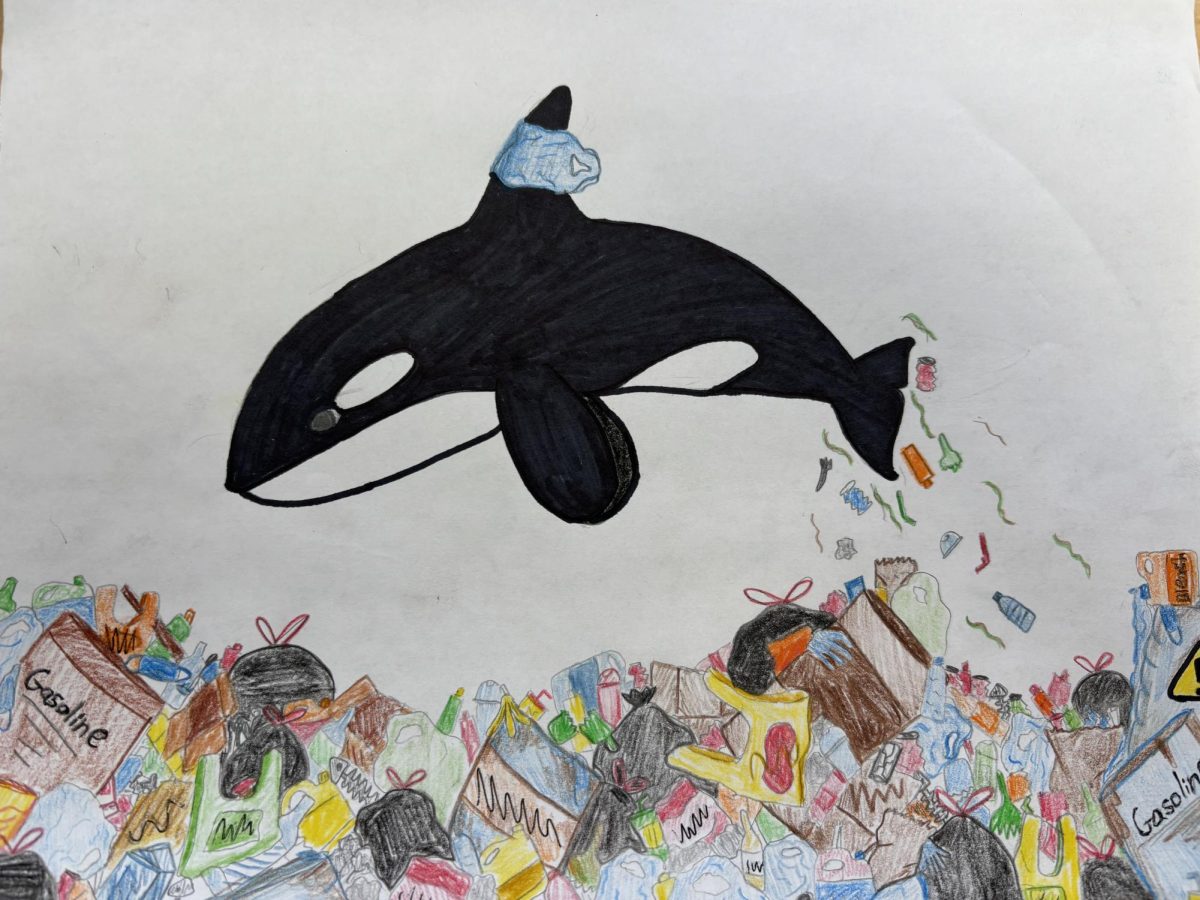
One big factor of humans’ negative influence is ghost nets, which have been discarded by fishers or lost in storms. These nets are difficult for aquatic animals to see and account for about 10% of all marine debris, affecting more than just orcas.
“Ghost nets cause them to get entangled, which stops them from being able to surface to breathe,” Marine biology teacher Shannon Kresge explained. “We need to have controlled migration areas where boats and ships can only go on certain routes… We need to stop overfishing.”
Along with overfishing, humans have killed and captured orcas for thousands of years, using them as circus toys. This has led to hundreds of deaths and now the possible extinction of killer whales. Specifically, the Southern Resident Orcas are endangered, with around 76 left today. These animals are intelligent, emotional mammals much like humans. With families and languages of their own, they aren’t just alive to contribute to nature; they’re alive to live.
The US has banned the capture and breeding of Orcas, but China continues to add to its collection. As they play a large part in ecosystems, this also circles back to the huge problem of climate change. Marine parks are killing them in captivity, but all humans are contributing to destroying their home.
It’s important to know the four different types of Orcas and how they are affected differently. The Southern resident Orcas are affected so much by fishers and dams because they mainly eat chinook salmon. These salmon are at a low population level; in just the Columbia-Snake River, millions of these fish have died due to dams.
The Northern resident Orcas also mainly eat salmon, but because they live in an area with more protected habitat and fewer dams, they have a stable population. The Transient Orcas are big and eat things like seals. The seals’ population is stable, and these Orcas are actually increasing in population. The Offshore Orcas also don’t face many threats food-wise, and though it’s hard to track their population, it’s likely stable.
So why is all this information important? Well, because Orcas have such distinct ways of living, if a pod of Orcas is lost, there’s no getting it back. Orcas, especially females, dying more frequently can disrupt the future lives of the whole pod. It isn’t instinctive for them to migrate certain routes, hunt in specific ways, have a certain vocal dialect, and social rules; it’s passed down by teaching, much like people. Orcas live in a matriarchy, meaning the females are the leaders. So, what they can teach goes with them.
In captivity, Orcas have faced psychosis, health issues, young deaths, and mistreatment. Many people don’t know this, but Killer whales have never once attacked a human in the wild. Creatures with the potential to roam the oceans, live long, and create a family have been subjected to a small cage for the purpose of entertainment.
Among the oceans you´ve been to or seen on a map, vessels and whale watching boats are causing noise pollution, making it difficult for Orcas to use echolocation to find food. This also increases stress hormones, weakening them further. Studies done by the Endangered Species Coalition found that chemical pollutants in the water seep into their tissues, making them lack much immunity. These chemicals, like PCBs and DDT aslo get passed from mother to calf, further leading to them lacking nutrients, which then affects their futures.
Yet, there is a solution. The Endangered Species Coalition has found that they can partially reverse the terrible damage marine parks and pollutants have caused. Studies done by the Fish Passage Center and the 1999 Marine Fisheries Services show that dams ruining the ecosystems of the salmon and Orcas can be torn down, resulting in a huge recovery. If activists continue to spread awareness and work towards stopping captivity worldwide, Orcas and their habitats can have a chance at being restored. Leading environmental organizations, such as IPCC, continue to remind us that if people don’t change the ways they affect the environment, we will no longer have the beautiful planet we once did.