



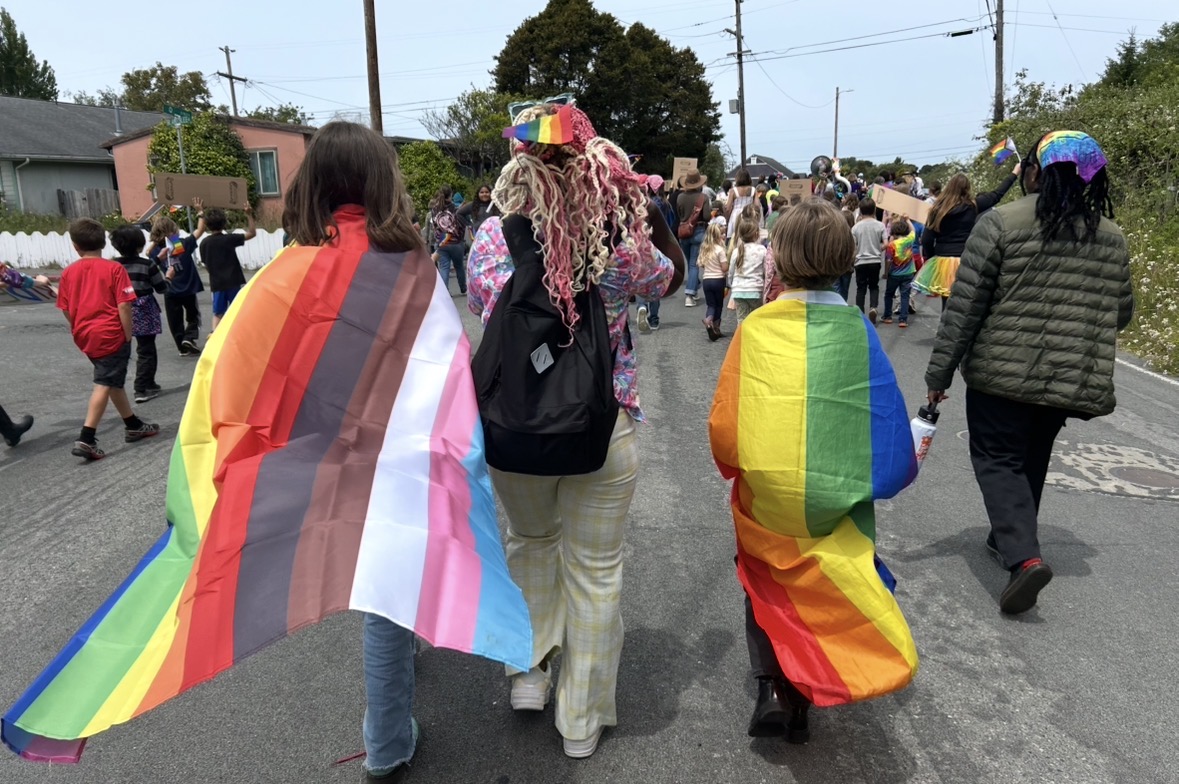












In June, supporters of the LGTBQ+ community all over the world celebrate with parades and festivities to commemorate the 1969 Stonewall riots that sparked a new era of activism for lesbians, gay men, and transgender people. Arcata has historically been a hub for activism. Humboldt County’s first pride festival was held in 1993 on the Arcata Plaza where it continued until 2009, when the marches relocated to Old Town, Eureka. The changes in our culture and society since Stonewall are so immense that it might be easy to forget why Pride Month is so important. Even living in a liberal “hippie-town,” the queer community is not immune to discrimination today, although it may take different forms.
In the past, coming out was often met with verbal harassment or physical violence. Although this is still a threat for the queer community, most discrimination comes in the form of jokes, slurs, and stigmatizing comments. An overwhelming number of students reported hearing derogatory homophobic slurs on campus and online.
Freshman Maliyah Johnson, who identifies as a lesbian, recalls her experience. “There’s this guy that will just keep calling me a dyke constantly, and I don’t really care, ” said Johnson. “But it gets annoying. I get called a fag sometimes.”
These slurs are extremely harmful, even when used as a joke.
Seemingly lighthearted comments like, “you’re a f*ggot” and “that’s so gay” are the most common ways that students observe homophobia at school. Most people who say these things don’t consider the harm behind their words, and it often comes from a place of ignorance and societal norms instead of intentional malice.
“I’ve even heard my own friends say homophobic things that make me uncomfortable,” said Johnson.
Even if these comments aren’t said directly towards anyone, and the person saying it may have gay friends or family, it normalizes the idea that LGBTQ+ people are lesser. Hearing these remarks can create an environment where people are scared to share their identity.
The LGTBQ+ community encompasses a large umbrella of identities, which all face unique struggles. Lesbian and bisexual relationships are often fetishized, and reduced to fantasies that cater to the male gaze.
“I’ve definitely had some guys make comments that it was hot that I liked girls, which I always thought was really weird,” junior Addyson Knife said. “ That stuff can make me really uncomfortable.”
Many other (especially feminine presenting) bisexual and lesbian women have shared similar experiences, and simply want to exist with their partner without being sexualized.
This is another example of comments that may seem harmless, but can be very damaging. Having open conversations and listening to others can put an end to this form of homophobia.
Other acts of homophobia/transphobia are intentional, and although more rare than they were in the past, are sadly still a serious problem. This can include physical violence, hate speech, and deliberately using dead names.
“Back in the beginning of the year, I was regularly harassed by former classmates of mine, and I was targeted by being pushed around, and I was called slurs,” said freshman Pey-Goy Simpson-Jewell.
When someone behaves like this, they are consciously aware of their negative feelings and make the active choice to discriminate and harass LGTBQ+ people. Anybody who is a victim or witness of this should submit an incident report form.
An anonymous sophomore reported hearing a guy in their class say that he would disown his brother if he were to come out as gay. A junior has experienced “drive by slurring, and getting stalked home and getting called slurs while threatening violence, [and] actual violence.” Even in 2026, these experiences are all too common. Almost 90% of students surveyed reported hearing comments that were discriminatory to the LGTBQ+ community at school, with a few saying that they have heard comments online or other places, but not on campus.
Gen Z are the first to experience growing up with the internet and social media, which can be a double edged sword for LGTBQ+ youth. The internet has a vast amount of information about the LGTBQ+ community that is easily accessible. There is also representation of gay, bisexual, and transgender people that can give a sense of community to LGTBQ+ youth, and show them that they are not alone. However, some may be more likely to say homophobic things when they know they can hide behind a screen. According to a national survey conducted by the Trevor project, LGTBQ+ youth are almost three times more likely to experience cyberbullying than their straight/cisgender counterparts.
Overall, students found Arcata High to be a more accepting climate than their middle schools. Older teenagers have developed more empathy and are more likely to have found friend groups that share their interests.
“There’s always been like jokes in middle school and definitely freshman year, but I feel like it started to mellow out more” Knife said. “Especially with the friend groups that I have, and we all don’t really care about those kinds of things.”
Having a support system of allies and LGBQ+ people can improve mental health and self esteem immensely. SAGA club is a great resource on campus to meet supportive individuals and advocate for LGTBQ+ rights.
While many students believe that Arcata High is becoming more accepting, discrimination and harmful stereotypes still exist today, 50 years after Stonewall. History shows that meaningful change only occurs when people speak up. Pride month serves as a reminder of not only how far we’ve come, but the work that still needs to be done.
Resources:
Arcata High Crisis Counselor
Arcata High’s Social Worker
The Trevor Project
1-866-488-7386
Suicide Prevention Lifeline
1-800-273-8255