


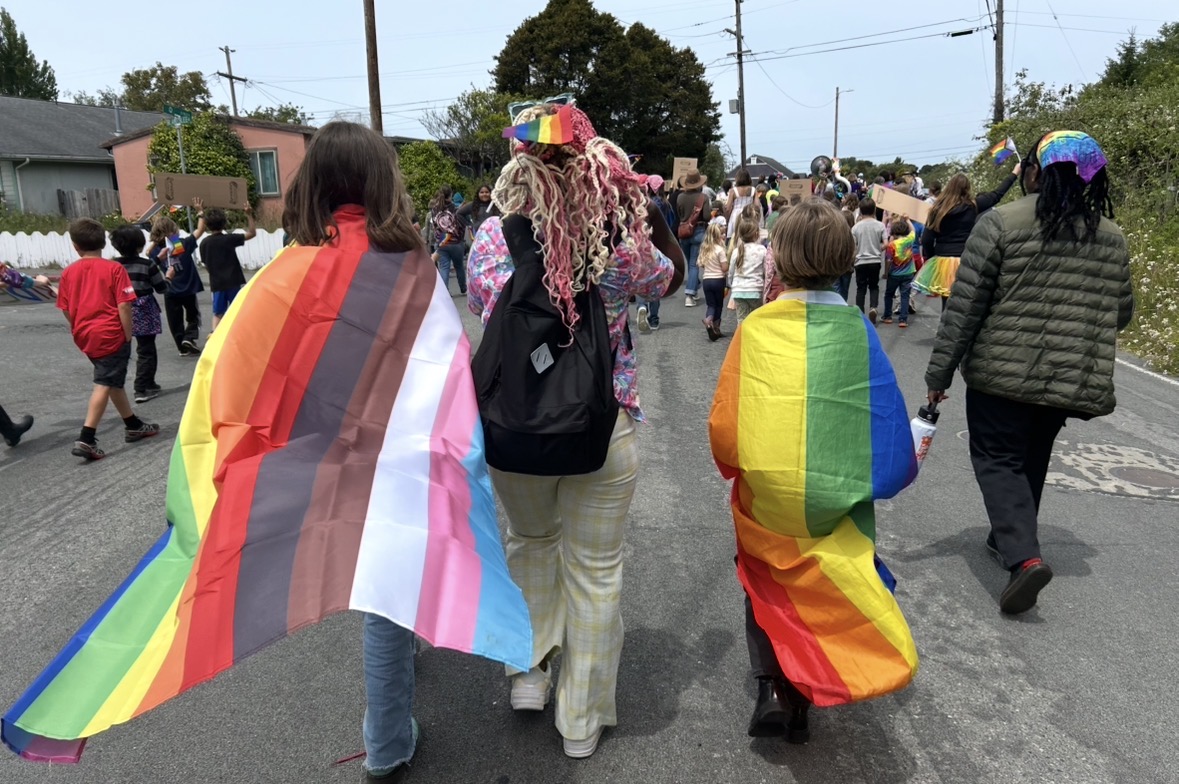














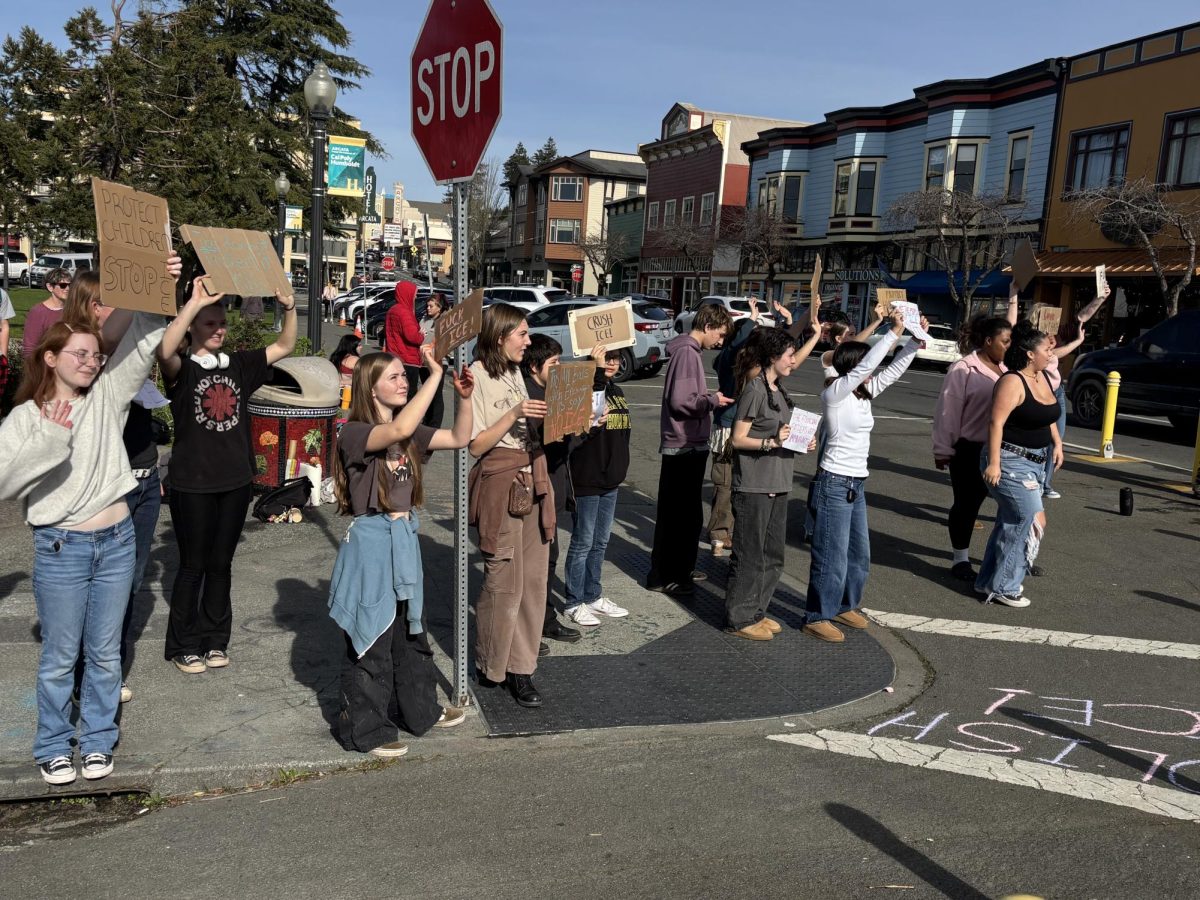
Arcata High School students participated in a nationwide strike calling for the removal of Immigration and Customs Enforcement (ICE) on January 30th, 2026, at the Arcata Plaza.
The protest, organized by larger movements such as “ICE Out of Minnesota” and “50501,” asked people to stop their normal daily routine by staying home from school, not going to work, and not shopping at any big corporations.
Strike organizers sought to oppose ICE’s actions and challenge new federal funding. Scheduled for January 30th, the strike coincided with the Senate’s federal budget meeting, where they supported the Democratic Party’s call to eliminate additional funding for ICE.
“Even if the people who are standing up for it aren’t affected by it at all, it’s still important to have that support and show it,” Arcata High sophomore Rosalina Shaw said.
At the Arcata Plaza, community members gathered with signs. On the ground, chalk outlines of bodies were drawn across the plaza, representing people who died at the hands of ICE. The artwork also served as a warning that if ICE is not stopped, more people could continue to lose their lives.
Arcata High seniors Meta Nave and Canela Zuleta Harper came up with the idea of the artwork, and the drawings were a way to make the consequences of ICE’s actions visible and difficult to ignore.
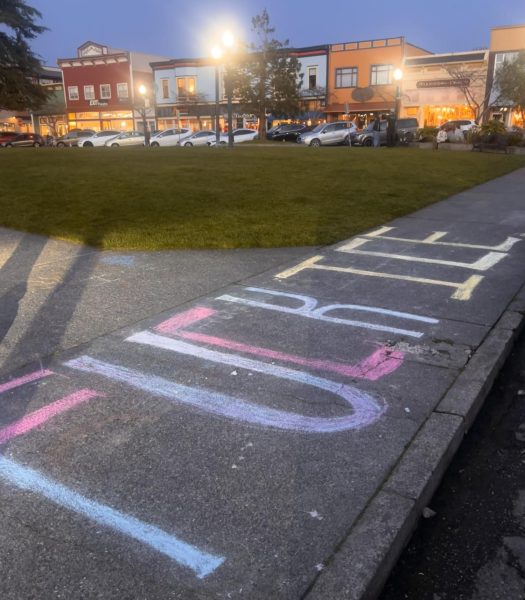
“I hope people see that people are dying and that it’s serious,” Nave said.
Another rally took place at the Eureka Courthouse that same day, where a noticeable number of youth participants were among the many people gathered. The turnout reflected a growing involvement of youth in local immigration protests, even without formal student organizing.
Some saw the strike as not just a protest, but a personal call to action.
“I have had a very clear moral sense that participating in this was the right thing to do,” English teacher at Arcata High, Alexander Kantner, said. He not only wanted but needed “to join students who wanted to stand up for what they believe in and stand against those things that threaten it.”
Many participants said they believe protests like this can lead to real change. They see striking as a way to draw attention to injustices, influence leaders, and encourage communities to take action.
“It’s difficult, but it’s possible,” Nave said. “I think creating opportunities like this shows the general public that, inevitably, we can create change.”