

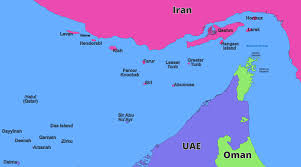

























As a result of the Israel-Iran war, a five-mile-long oil spill is now visible from space. In an attempt to weaken Iran’s economy, Israeli forces have begun attacking civilian-linked oil facilities for the first time. Four Oil depots around Tehran were targeted on March 7th. Israeli forces’ reasoning behind the attack, according to a response to Human Rights Watch, was that the depots “were designated to provide fuel directly to units in the regime’s armed forces.”
This isn’t the first instance of oil spills being visible from space, with a war being held responsible. During the 1991 Gulf War, oil and well fires could be seen by astronauts aboard the Space Shuttle Discovery. Another example is Ukrainian attacks on Russia in late April of this year, resulting in a 31-mile-long oil spill. Alison Osdowd, who is a CO Director of the Humboldt River Institute and a Cal-Poly Environmental professor, said, “That’s horrible, it’s going to be devastating to the ecosystems in that area and the folks’ livelihoods as well.”
Experts worry about the impact on people’s water and life quality. Individuals involved in attempting to clean the oil spills in the Gulf of Mexico had lasting health issues, such as respiratory issues, not being able to run or walk, and other complications. There’s also an increase in stress and depression amongst those living by/cleaning up these oil spills. With the active combat taking place in this area, cleanup efforts are not a top priority.
Oil becomes trapped in the soil, making it harder for water to soak in and air to circulate. Contaminated soil has also been known to leak hazardous particles into the air. Along with the soil, air quality has decreased with toxic smoke containing sulfur dioxide and nitrous oxide being released from these attacks. Thousands rely on the Strait of Hormuz (where the 5-mile spill is located) not only for water but as a source of food. This spill can lead to contamination of food sources, causing illness and harming economies reliant on fishing.
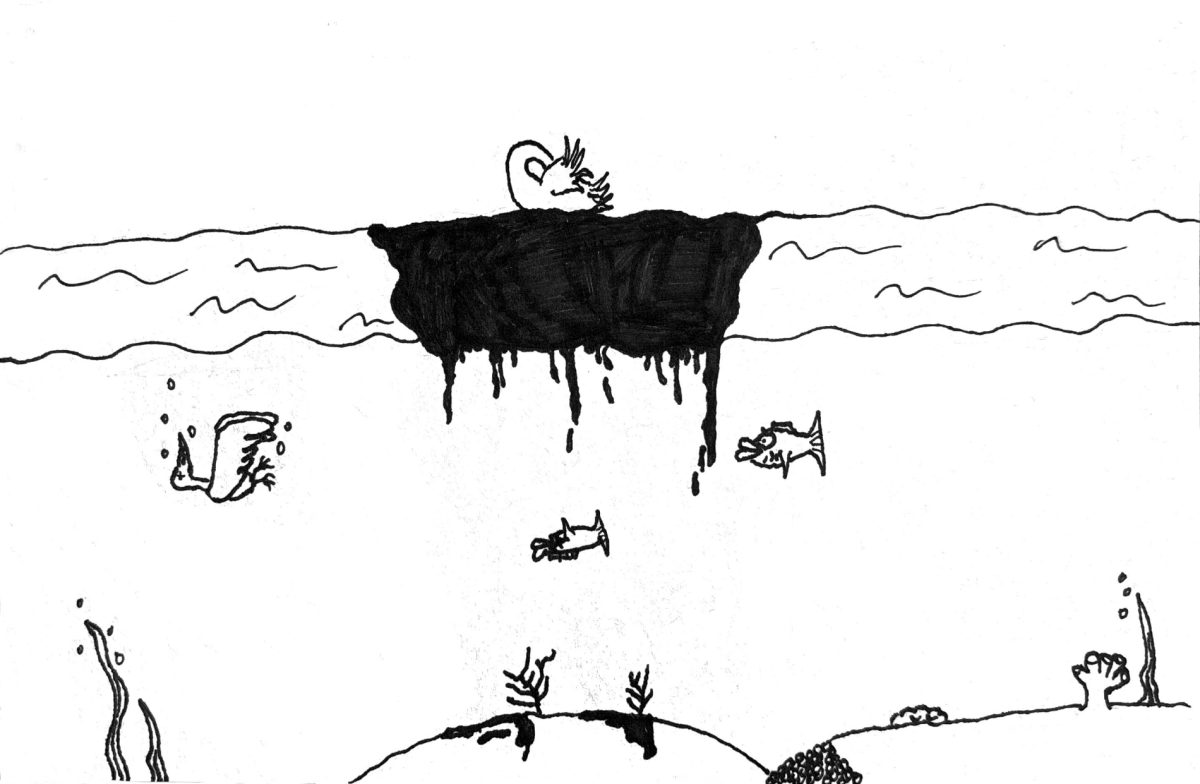
In areas with large oil spills, fish don’t grow as large. They develop gill damage, reproduction failure, and liver disease. Oil covers fish gills, leading to death. If they are not suffocated, the next generation will be deformed and likely die from oil exposure. For marine mammals, these spills can cause respiratory issues in creatures like dolphins and whales.
Animals that clean themselves, such as birds and otters, end up ingesting this oil, which causes organ failure and internal burns. The oil coats their fur/feathers, which destroys their waterproof insulation and can lead to hypothermia. “It affects their feathers to be water resistant; the birds can’t get the oil off of their feathers and eventually sink,” Osdowd said. This applies to other marine mammals reliant on their buoyancy as well. Oil sinks to the sea floor, smothering coral reefs, mangroves, and seagrass beds. Organisms in the food web get poisoned, which moves up the chain, which includes us.
