

























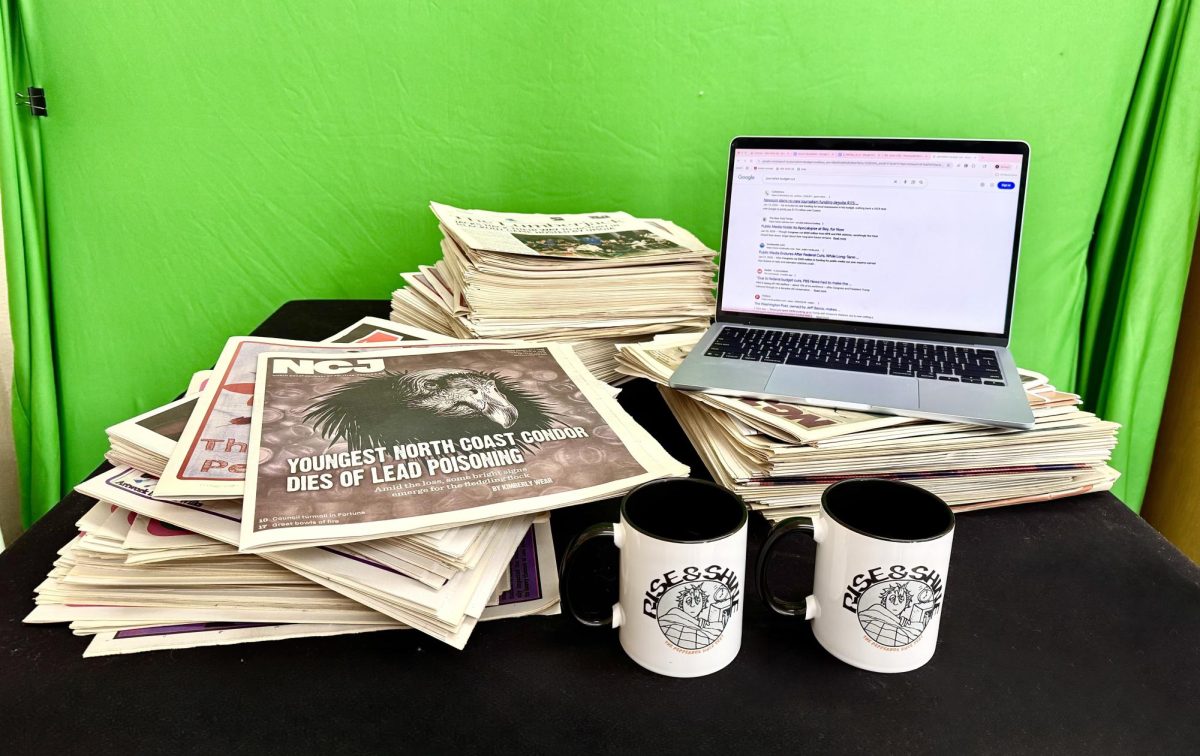
California governor Gavin Newsom included no new funding for local journalism in his proposed budget, despite a $175 million deal with Google formed in August 2024. Previously, the state agreed to contribute $70 million, and Google, $50 million to the newly formed California Civic Media Fund over the next five years.
This agreement with Google stems from the belief that Google has a responsibility to give back to the newsrooms and reporters they profit off of. Google profits from news outlets, primarily from headlines, photos, snippets, and newly emerging AI overviews, which drive ad revenue. Before the deal was negotiated, Google spent $11 million lobbying state legislatures against proposals that would require them to pay news outlets in order to use their content. Other concerns have also been raised that if search engines were required to pay news outlets by how many clicks the link received, news outlets would start publishing “clickbait” content to make the most profit. In a study conducted by the News Media Alliance in 2019, it was estimated that Google profited $4.7 million from news sites in 2018.
In May 2025, Newsom significantly decreased the amount he promised to contribute for the first year, from $30 million to only $10 million. Google in turn said it would match the $10 million contribution, but no more. Newsom cited budget restraints as the reason for this cut. California News Publishers Association President Chuck Champion told Calmatters, Newsom is “more interested in the billionaires and his friends than he’s interested in journalists who are out on the street.”
California is one of only 16 states in the U.S. that receives no state funding from public media, and ranks 45th in the U.S. for local journalism. California journalism is still facing a steep decline.
On a national level, Congress voted in 2025 to cut $1 billion in federal funding for public broadcasting. The Corporation for Public Broadcasting, which funds NPR and PBS is dissolving as an effect of this. The Trump Administration argues that taxpayers shouldn’t have to fund allegedly biased public media they don’t agree with. These changes have caused many news outlets that rely on public funding in California and across the U.S. to close or significantly downsize.
In 1787, Thomas Jefferson wrote that, if he was forced to choose “whether we should have a government without newspapers or newspapers without a government, I should not hesitate a moment to prefer the latter.”
However, 246 years ago, exchange of information was vastly different from today. When Johannes Gutenberg created the printing press, people were able to distribute information faster and farther than ever before. The invention changed the world in many ways, even fueling the American Revolution by making learning accessible for all people, and creating outlets to express public opinion.
In the past 20 years alone, there has been a rapid shift in the way we consume media. Information used to be limited to newspapers, radio, and television. Now, there are endless options for accessing information in many different formats. Short videos are becoming increasingly popular on platforms like Tiktok, Instagram reels, and Youtube shorts. Social media posts have become a leading source for breaking news, and AI creates an interactive way to access news.
Editor of Lost Coast Outpost, a digital only news site in Humboldt County, Hank Sims, believes “nowadays, advertisers have innumerable places to advertise and readers have a billion things to read at any given time. A lot of legacy media organizations, especially, have a hard time adapting to that.”
Although Lost Coast Outpost is able to fund itself mostly through local advertising, as well as receiving commission from third-party advertisers, such as Google AdSense and DoubleClick, many other news outlets struggle to do the same. Consumers are spending less money buying the newspaper, but journalism still costs money to produce, creating an imbalance.
“We’re able to capture people’s attention because everyone really wants to know what’s going on in Humboldt,” Sims said. “We’re an inward-focused community.”
Unfortunately, many other news outlets haven’t been so lucky. When news outlets with a niche audience close due to lack of resources and funds, people in rural and secluded areas lose their primary source of information. Another effect is the decline in watchdog journalism, which is a form of investigative journalism that monitors people, government, and businesses, to expose injustices to the public.
As the way people consume news evolves, funding for journalism remains uncertain. It is unclear whether California will continue with the deal with Google in the future or if they have withdrawn completely. Many groups and individuals continue to lobby state legislators in the fight to preserve local journalism.