
























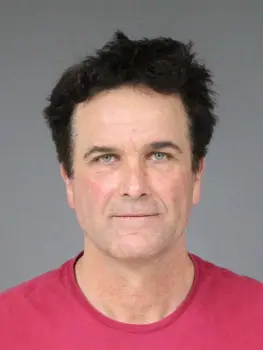
Arcata Bottoms cattle rancher Ray Christie was acquitted after a highly publicized animal cruelty case in 2018, when close to 300 dead cows were found improperly disposed of in and around state waterways on his ranch in a “SWAT-style” raid. The scene was described by the Humboldt Del Norte Cattlemen’s Association as “horrific and disturbing.”
On Dec. 1, 2025, nearly eight years later, Larson LLP, a Los Angeles-based law firm representing Christie, issued a 68-page complaint against Humboldt County and its officials for violating Christie’s civil rights.
Christie seeks financial compensation for an unlawful search, interrogation and arrest. He is suing The County of Humboldt for emotional damages and damages to his reputation. The complaint issued by Larson LLP states, “This lawsuit is about vindicating Mr. Christie’s civil rights and highlighting the hypocrisy of Mr. Mendes, Mr. Kamada, and Mr. Honsal, while also allowing my client to assert the truth of what has so far been a one-sided story. We ask the court to right the wrongs Humboldt County and its officials have inflicted on Mr. Christie.”
The multi-agency raid included more than 20 police officers, as well as members of the Humboldt County Sheriff’s Office, the Humboldt County Drug Task Force, the California Department of Fish and Wildlife, the U.S. Department of Agriculture, and a local hazmat team.
The case names Deputy Sheriff Travis Mendes and Deputy District Attorney Adrian Kamada for alleged felonies against Christie, as well as Sheriff William Honsal for supporting their actions.
This statement claims that Mendes, who served as Humboldt County’s livestock deputy, violated his Constitutional rights, and arrested Christie unlawfully.
According to the complaint filed on Christie’s behalf, “Ray asked to speak to a lawyer. Rather than calling a lawyer for him, law enforcement ensured news media would be on the scene.”
His case claims that Mendes intentionally tampered and withheld evidence in court. The complaint says that officer Mendes secretly recorded the unlawful interrogation on his cell phone, which was discovered a year and a half later in trial. Christie’s defense believes failure to present this piece of evidence in court led to an unfair trial. It states that Mendes lied under oath, saying that he collected evidence on only three devices, yet it was proven that he took photos and audio recordings on over 18 devices. The complaint also alleges that Mendes moved an ear tag to a cow skull to make the item look connected to the carcass for a more dramatic photo.
Following the arrest in 2018, Christie was formally charged on 35 counts, relating to animal cruelty and dumping carcasses near state waterways. Christie’s bail was set at $25,000 following his arrest. The case ended in a mistrial on account of a single juror who did not find the evidence conclusive enough to convict him.
He was accused of depriving cattle of sustenance, shelter, and water, leading to their deaths. A state veterinarian testified that the vast majority of his herd were “very thin to dying.”
Authorities also reported abuse towards several dogs, kept in unsanitary conditions without enough space. His actions were condemned by the sheriff’s office, which described it as “large-scale animal cruelty.”
His defense contends that Christie frequently bid on sick or malnourished animals at the auction to restore their health on his ranch, explaining his cattle’s appearance. The document also states that Mendes was an active participant in the auctions, so he must have known that Christie was not responsible for the animals’ condition.
“With his own eyes, Deputy Mendes saw the kinds of animals being brought to the auction yard by other ranchers. Deputy Mendes saw that Ray was buying those animals,” according to his complaint.
The complaint issued by Larson LLP denies any allegations of Christie’s alleged abuse, referring to him as a “cow whisperer” and an “animal lover.” It references Christie’s pasture, devoted to exotic cattle and other abandoned animals– which he cares for with no monetary gain– as proof of this. Christie has a history of animal abuse, he was convicted in 2009 for running a rooster fighting ring in Fieldbrook.
The suit argues that Mendes had a personal vendetta against Christie. The complaint compares Ray Christie to the Yellowstone main character John Dutton, who is a cattle rancher, and Mendes to the wannabee cattle rancher competitors trying to sabotage him.
Humboldt County has around 60,000 cattle according to the 2022 census, yet the county does not have a rendering plant. This presents an issue for all cattle ranchers in Humboldt County. Burying animal carcasses is a legal way of disposal in Humboldt County, given that they follow regulations, such as being 150 feet away from a water source.
Christie’s reasoning for the carcasses on his property states that as he kept around 4,000 cattle in his herd, animals are going to die. It is true that livestock often die from natural causes, yet not at a rate that would explain the number of carcases found on Christie’s property. The most recent data from the National Animal Health Monitoring System shows a 1% mortality rate for cows, which would amount to roughly 40 from his herd.
Whether or not Christie engaged in animal abuse or improper carcass disposal is a separate matter and does not determine whether the officers’ actions amounted to civil-rights violations. The case will continue to evolve over the following months. What happens next will determine not only Ray Christie’s future, but how Humboldt County chooses to define justice.