























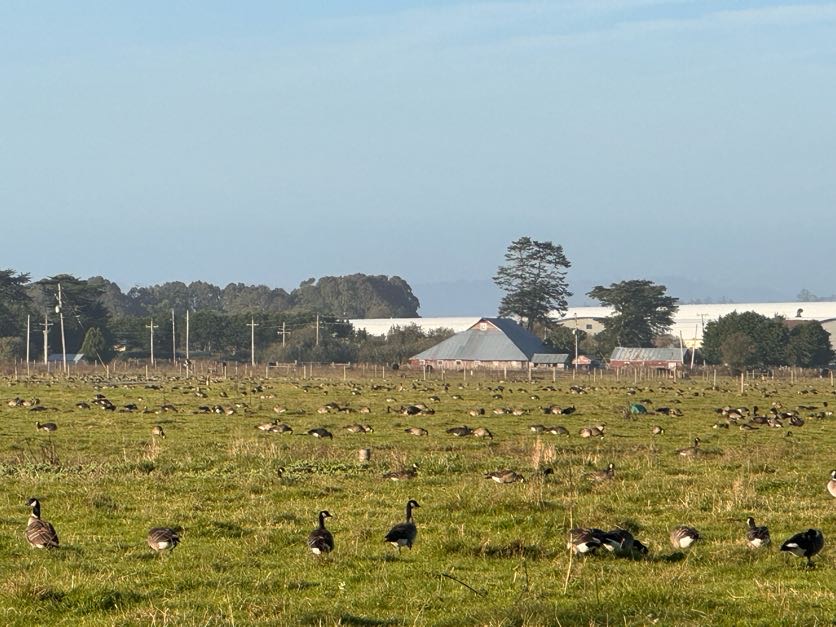
Walking to school one morning, you breathe in the cold, foggy Arcata air that makes your head ache and throat dry. Winter is here, and it’s bringing birds that sound like morning traffic. You look up and see a beautiful formation of Canadian Geese flying in a V flight pattern. One after another, each goose takes its turn as the lead, making the flight less draining for the others.
The sky fills with thousands of geese as they migrate from Arctic Canada. Through Washington and Oregon, down to Northern California. The sky fills with salt and pepper as a few Snow Geese get confused and tag along.
Humboldt County is a goose’s paradise. The large amount of agricultural land gives the geese comfort when they migrate for miles. Geese feed on farmers’ grass, leaving farmers short on feed for their animals.
Canadian geese typically live in northern Canada, but they also fly south when the winters get cold and rough. Due to global warming, many geese in Canada and Alaska don’t lay eggs there as their ancestors did. Now, when they migrate south, they lay their eggs in a safer area near water and lush grass, which Northern California has lots of. They feed on little fishes, algae, and lots and lots of grass.
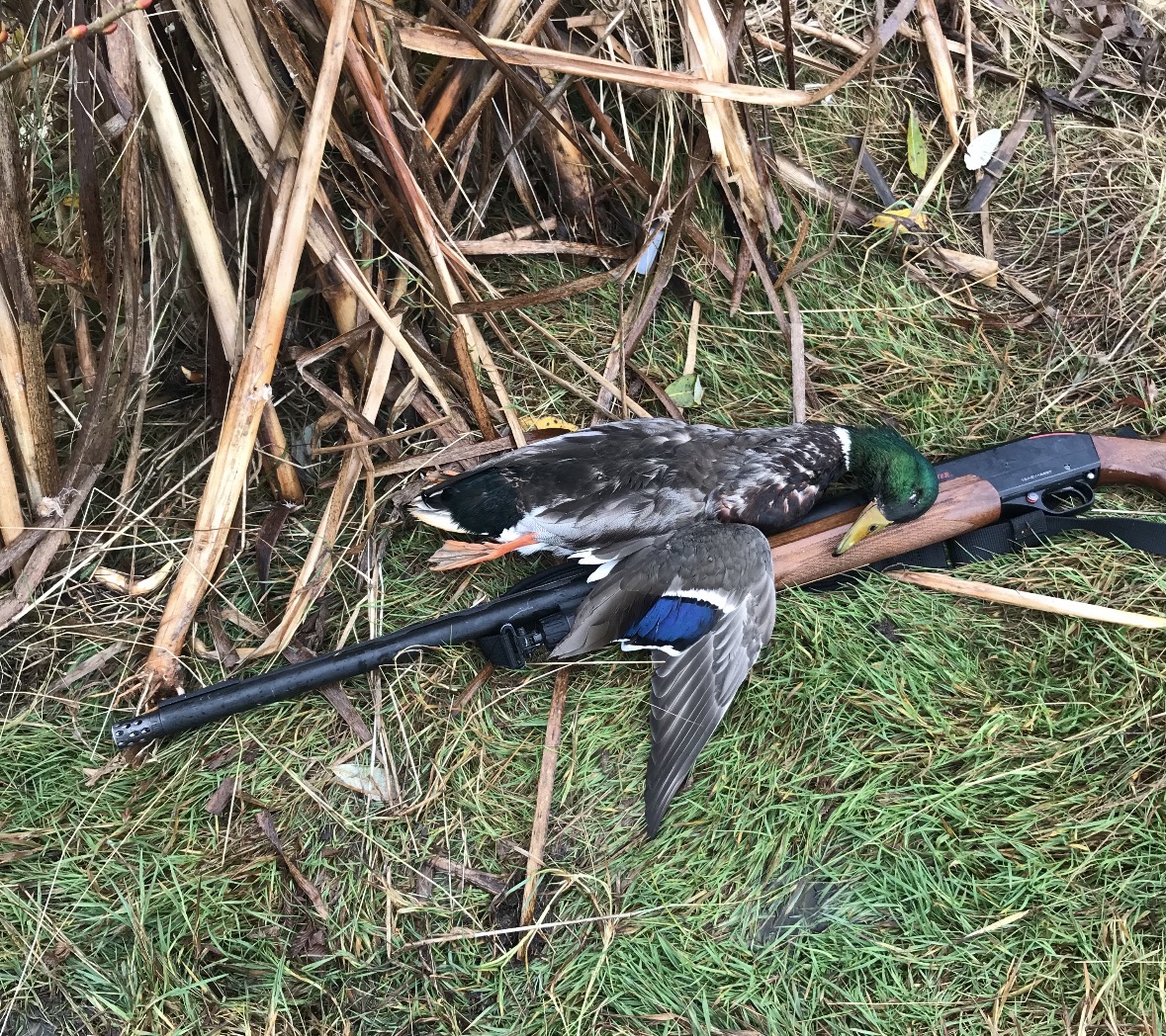
Many students at AHS volunteer at the National Wildlife Center to help injured birds and to research their natural habitats. For many, they grew up hunting with their family. Getting to experience a wild hobby that you can eat or make unique things with is so exhilarating.
Geese have thick feathers that keep frost and cold out, keeping them warm. It’s just like a huge puffer coat you’d wear to the snowy mountains. But that’s not the only thing that their feathers protect. Their feathers act as a shield from the cold and from bullets from hunters. But not always do the feathers save them. If you don’t get them the first time, they’re a real pain to knock down.
“It’s a little bit disappointing to see them (geese) come down a little bit and then fly away,” Andrew Zinselmier said.
The National Wildlife Center and Cal Poly Humboldt work together to help maintain the natural habitat that’s been corrupted by humanity for the geese. They help by checking our bay’s water levels and the geese’s main food source. They also track their flight pattern, so we know when the geese will be back to breed and lay their eggs. Laying around 2-9 eggs, the jumpy baby geese will fly back with their parents when the season comes to an end.
