




















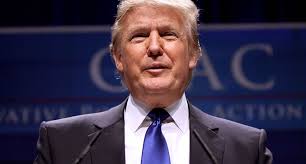
“We are the storm, and our enemies cannot comprehend our strength… Our lineage hails back to Athens, to Rome… Our ancestors built civilization… You are nothing. You can build nothing, create nothing… You have no idea the dragon you have awakened (???)… We will save this civilization, save the West… Because we are on the side of goodness. We are on the side of God.”
This is not a speech from 1932.
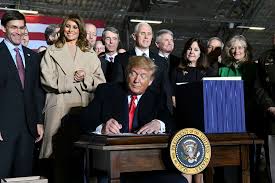
This is President Donald Trump’s Deputy Chief of Staff and architect of the Trump administration’s border policy, Stephen Miller, in September of 2025, at Charlie Kirk’s memorial. He is in front of a crowd of thousands at State Farm Stadium in Glendale, Arizona, as they clap and cheer after every other sentence.
Most of the comments under ABC News’s video of the speech read something along the lines of questioning why Miller is ranting so aggressively at a funeral, claiming he likely watches too much anime, or saying, “Headline that brought me here said: ‘Stephen Miller says dragon has awakened at memorial service.’ Severely disappointed there was no ACTUAL dragon.”
But while some see this as a cartoonish, grandstanding villain, giving an off-topic speech at a recently murdered conservative activist’s funeral service, others see it as something else. Fascism.
“Fascist.” “Fascism.” “You are a fascist.” The word has been thrown around in recent decades as if it’s a common insult like calling someone “stupid,” “ugly,” or morally bankrupt in some way. To a certain extent, the amount it’s being used has diluted its historical meaning, but what is the actual traditional meaning?
Is its surge in popular usage, particularly in relation to Donald Trump’s presidential administration, grounded in anything real? And if so, what are the arguments against the Trump Administration actually being fascist?.
In simple terms, fascism is defined as a revolutionary, ultra-nationalist, far-right ideology.
In more complex terms, though, renowned Italian philosopher and professor Umberto Eco, who grew up under Benito Mussolini’s regime in Italy during the early 1900s, developed a 14-point list in 1995 that comprises some of the primary elements and warning signs of fascism.
Lawrence W. Britt, a former international businessman, writer, and author of Fascism Anyone?, also made a 14-point tally in 2003 for some of the most prominent principles of Fascism.
To avoid repetitiveness, here is a part conjoinment between both of these men’s lists, also equaling 14-points. It is important to note that not all of the points have to be fulfilled for a movement to be fascist, and it is not an exhaustive list by any means.
1. Hyper-Nationalism: (Lawrence) “Fascist regimes tend to make constant use of patriotic mottos, slogans, symbols, songs, and other paraphernalia. Flags are seen everywhere, as are flag symbols on clothing and in public displays.”
Donald Trump and his administration have constantly and consistently used deeply nationalist “America-first” rhetoric.
2. Glorifying tradition or the past: (Eco) “One has only to look at the syllabus of every fascist movement to find the major traditionalist thinkers. The Nazi gnosis was nourished by traditionalist, syncretistic, occult elements.”
Trump has obviously glorified the nation’s past, Make America Great Again.
3. Rejection of Modernism/ dislike and contempt for intellectuals and the arts: (Lawrence) “Fascist nations tend to promote and tolerate open hostility to higher education and academia. It is not uncommon for professors and other academics to be censored or even arrested. Free expression in the arts is often openly attacked, and governments often refuse to fund the arts.”
Trump has consistently defunded higher education and supported the banning of books deemed “too woke.”
4. Appealing to economic frustration: (Eco) “One of the most typical features of historical fascism was an appeal to a frustrated middle class, a class suffering from an economic crisis or feelings of political humiliation, and frightened by the (perceived) pressure of lower social groups.”
According to most exit polls, the principal reason Trump won in both 2016 and 2024 was frustration about the state of the economy and “the system,” which he claimed, “I alone can fix.”
5. Scapegoating as a unifying cause/ appeal to difference: (Lawrence) “The people are rallied into a unifying patriotic frenzy over the need to eliminate a perceived common threat or foe: racial, ethnic or religious minorities; liberals; communists; socialists, terrorists…” (Eco) “The first appeal of fascism or prematurely fascist movement is an appeal against intruders.”
Trump’s second strongest issue in exit polls, behind the economy, has been immigration, as he has consistently scapegoated, dehumanized, and blamed “illegals” for the current state of the economy. A classic fascist move used famously by Nazi Germany with its “stab-in-the-back” myth, which primarily blamed Jews, but also communists, liberals, and more, for the state of the German economy at the time, as well as its loss in the First World War.
6. Obsession with a plot/ national security: (Lawrence) “Fear is used as a motivational tool by the government over the masses.” (Eco) “…the followers must feel besieged.”
The admin, among other things, has used “national security” as a pretense to bomb alleged drug boats in the Caribbean.
7. Supremacy of the military: (Lawrence) “Even when there are widespread domestic problems, the military is given a disproportionate amount of government funding, and the domestic agenda is neglected. Soldiers and military service are glamorized.”
Congress, led by the GOP, has increased the military budget to over a trillion dollars.
8. The “enemy” is somehow both strong and weak: (Eco) “By a continuous shifting of rhetorical focus, the enemies are at the same time too strong and too weak.”
Trump’s rhetoric has a common pattern that claims “migrants” are somehow both invading the country militarily, but also are too helpless and destitute to do anything but leech off welfare.
9. Lack of recognition for human rights: (Lawrence) “Because of fear of enemies and the need for security, the people are persuaded that human rights can be ignored in certain cases because of ‘need.’ The people tend to look the other way or even approve of torture, summary executions… long incarcerations of prisoners, etc.”
They have detained both U.S. citizens and undocumented immigrants in detention centers with awful conditions, often indefinitely with no trials, thirty-two of whom have died in Immigrant and Customs Enforcement (ICE) custody over the past year, according to The Guardian.
10. Religion and government intertwining: (Lawrence) “Governments in fascist nations tend to use the most common religion as a tool to manipulate public opinion.”
Trump and the GOP have increasingly pushed for the Ten Commandments to be posted in public schools, government funds to go to private religious schools, and established a task force on “anti-Christian bias” in government entities.
11. Corporate power is protected: (Lawrence) “The industrial and business aristocracy often are the ones who put government leaders into power, creating a mutually beneficial business/government relationship and power elite.”
While historical fascist leaders like Mussolini have integrated corporate power more by dominating it, the Trump administration has done a reverse version of that, with corporate powers taking over and dominating politics rather than the other way around. Trump has interwoven deeply with tech, oil, and defense executives such as Peter Thiel and Elon Musk.
12. Hyper-fixation on “Law and order”: (Lawrence) “…the police are given almost limitless power to enforce laws. The people are willing to forego civil liberties in the name of patriotism. There is often a national police force with virtually unlimited power in fascist nations.”
While it was the Gestapo and the Brownshirts in 20th-century Germany and Italy, ICE has operated with almost limitless power, not requiring warrants signed by judges, and according to Vice President J.D. Vance, having “absolute immunity,” meaning they cannot be civilly sued. Almost all republicans have defended them totally, even after they killed two US citizens in broad daylight, with multiple camera angles capturing every angle of their executions.
13. Rampant cronyism and corruption: (Lawrence) “Fascist regimes are almost always governed by groups of friends and associates who appoint each other to government positions and use governmental authority to protect their friends from accountability.”
Trump appointed people with absolutely zero experience, such as Dan Bongino, Kash Patel, and Pete Hegseth, to important cabinet positions because they personally know they are only there because of the president, making them absolutely loyal to him.
14. Fraud elections: (Lawrence) “Sometimes elections in fascist nations are a complete sham. Other times, elections are manipulated by smear campaigns against or even assassinations of opposition candidates, the use of legislation to control voting numbers or political district boundaries, and the manipulation of the media. Fascist nations also typically use their judiciaries to manipulate or control elections.”
There has been rampant gerrymandering in Trump’s second term, with election maps in Texas and Ohio completely redrawn to favor Republicans. And of course, he rhetorically motivated a crowd to attempt a coup, tried to overturn and dispute election results with no evidence, “joked” about running for a third term, “joked” about cancelling the 2026 midterm elections, and called for the nationalization of elections with his “people” in 15 states around the country to “make sure there isn’t any fraud” in the 2026 midterms.
In Trump’s second term, the administration has repeatedly exhibited many, if not all, of these traits of fascism that Lawrence and Eco laid out in 1995 and 2003, respectively.
But if this is fascism, why is there still an opposition to Trump in politics and the media? Isn’t Fascism Totalitarian? And one might also say, “We are a nation of checks and balances; something like fascism could never arise in America, we are exceptional.”
Eco and Lawrence’s 14 points are more of a digestible framework for different aspects of Fascist regimes, however Robert Paxton, a Columbia professor, is considered to be the world’s leading scholar on fascism.
His paper, “The Five Stages of Fascism,” makes the exact claim you’d expect based on its title: there are five stages of fascism. The fourth stage, called “Exercise of power,” is where the regime balances its revolutionary goals with the current existing institutions.
“The movement and its charismatic leader control the state in balance with state institutions such as the police and traditional elites such as the clergy and business magnates.”
This strongly resembles where we are right now, with the administration still operating (kind of) within the checks and balances of the U.S. Constitution. Luckily, most fascist regimes do not get to the fifth stage, the one that engulfed Italy and Germany in the early 20th century.
In response to the claim that our country is so exceptional that fascism could never manifest itself here, Timothy Snyder, another professor from Yale University who is an expert in Fascism warned, “If you think that there’s this thing out there called America, and it’s exceptional, that means that you don’t have to do anything. Whatever’s happening, it must be freedom. And so what your definition of freedom just gets narrowed, and narrowed, and narrowed, and soon, you’re using the word freedom—what you’re talking about is authoritarianism.”
But there is one criticism of the assertion that Donald Trump is a fascist, which does have significant credence. Most historical fascists, Mussolini, Hitler, and Franco, have been absolutely ideologically committed to their movements, with little room for pragmatic compromises with other groups.
Donald Trump held up an LGBTQ pride flag at a rally in 2016 for political points. He also signed bipartisan criminal justice reform, as well, because his son-in-law pushed it, and it was polling well. These are moves that classical, dogmatic fascists would not have made.
Donald Trump’s administration may be functioning like one that is ascending up the steps of fascism, and some of his top advisors and policy makers, particularly Stephen Miller, may be blood and soil white nationalist fascists.
But Donald Trump does not go to sleep at night thinking about a white ethno-state, or a supreme totalitarian America, or even about deporting “illegals.”
Donald Trump goes to bed at night thinking about himself, nobody, and nothing else.