




























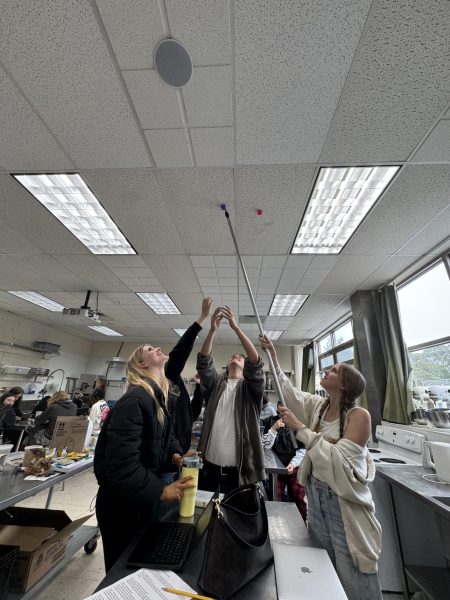
They’re on desks, in backpacks, in cars, and somehow, even stuck to ceilings. After blowing up on TikTok, NeeDohs
have taken over schools, turning a simple squishy toy into one of the biggest trends of 2026.
But is there actually a reason behind this obsession?
For many students, the trend started online. “I just heard about them on TikTok, and then I got one,” senior Medora Rostad said, who got her first NeeDoh about a year and a half ago. Like many trends, popularity spreads quickly. “It had been going on for a while, but it started getting bigger over Christmas break,” freshman Ruby Chausse explained.
Part of the appeal is simple: they’re fun. Squishy, colorful, and oddly satisfying, NeeDohs are easy to use and hard to put down.
Still, the real reason many students keep them close isn’t just because they’re trendy; it’s because they help.
Fidgeting, often seen as a distraction, can actually serve a purpose. According to therapists, restless movement, sometimes called “psychomotor agitation,” is common in people with anxiety. It’s essentially extra energy being released physically. Studies from the National Library of Medicine suggest that fidgeting can help improve attention, especially for people with ADHD. By giving the brain a small, repetitive task, it becomes easier to stay engaged with bigger tasks like listening in class or studying.
For students with ADHD, fidgeting can even improve focus. Instead of being a sign of distraction, it can be a tool for concentration as long as it’s mindless and not too engaging.
That’s where fidgets like NeeDohs come in.
“They can help students with things like distractibility and attention,” Education Specialist Seanessy Gavin said. “As well as sensory regulation. And I think that those issues might be happening more and more for students and people in the world these days.” But even for students without diagnosed conditions, having something to “play” with can make a difference.
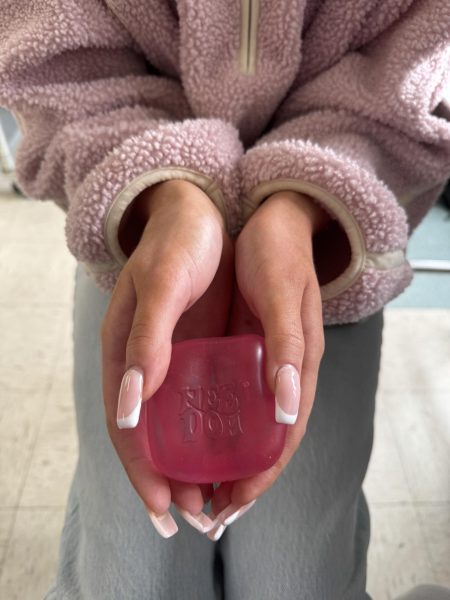
Research supports this idea. Studies from the National Library of Medicine suggest that fidgeting can help improve attention, especially for people with ADHD. By giving the brain a small, repetitive task, it becomes easier to stay engaged with bigger tasks like listening in class or studying.
However, not everyone sees Needohs as helpful.
As their popularity has grown, so have the problems. Teachers report that the gooey toys are frequently broken, sticky, and disruptive, often leading to confiscation and, in some cases, students facing detention for having them. Because of this, numerous school-wide bans have been implemented nationally and locally in spring 2026 due to safety and distraction issues.
“The way that we used to say it is that a fidget should stay out of sight,” Gavin said. “It’s not necessarily something in front of your eyes or the eyes of others”.
This raises an important question: do the benefits outweigh the downsides?
The answer isn’t simple. For some students, fidgets can be a tool for focus and stress relief. For others, they’re just a fun distraction that can easily go too far.
Ultimately, it may depend on how they’re used. If a fidget becomes more interesting than the lesson, it defeats its purpose. But when used correctly, NeeDohs can quietly support concentration.
