

























The U.S., along with its Middle East ally, Israel, launched mass strikes across Iran early Saturday morning. The Iranian military retaliated with its own strikes on Israel, as well as on U.S.-aligned Arab countries and the American bases in them. This elevated the conflict to an even broader scale.
According to both President Trump and Israeli intelligence, Iran’s supreme leader, Ali Khamenei, was killed by an Israeli airstrike during the initial missile exchange of the conflict. This significant and historical event is unlikely to stop the war, as Khamenei was 86. The need for leadership in his absence has likely been planned extensively.
Outside of the assassination attack on Khamanei, U.S.-led strikes hit the capital Tehran, as well as the cities Isfahan, Shiraz, Urmia, Chabahar, Minab, and more, according to the New York Times.
In Israel, one person has been confirmed to be killed and 121 injured in Iran’s retaliatory strikes, according to Israeli emergency services. No American military servicemen have been killed or injured so far. In Iran, 201 people have died, and 747 have been injured, according to the Iranian Red Crescent.
This includes two separate girls’ elementary schools in Iran that were hit by Israeli bombs during the first salvo, one in Minab, one in Tehran. The strike in Minab reportedly killed at least 51 school girls, potentially up to as many as 100, according to Al Jazeera. The casualties in the Tehran school strike are unknown.
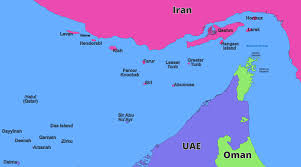
Iran’s response hit Israel hard. Furthermore, some residential areas and American military bases in Kuwait, Bahrain, Qatar, the United Arab Emirates, Saudi Arabia, and Jordan have been attacked, according to the New York Times.
Why did the U.S.-led attacks happen?
This comes after negotiations between the Trump administration and Iran seemingly broke down. The U.S. demands for Iran have been foggy at best throughout the most recent negotiations. However, they have broadly called for a halt to Iran’s nuclear enrichment program and a stop to Iran’s violent repression of popular demonstrations against the government.
Another large American motivation is to support the overthrow of what Israeli Prime Minister Benjamin Netanyahu has called an “existential threat” in the region. Since the 1979 Iranian revolution, Israel has viewed Iran as its most significant adversary.
This intense rivalry is fueled in part by Iran’s backing of militant proxy groups, such as Hamas and Hezbollah, whom have engaged in multiple large-scale struggles with Israel. This relates back to the longstanding colonial conflict between Israel and the Palestinian people.
These latest attacks on Iran are the second time the U.S. and Israel have bombed the country in less than a year. The last attack was an Israeli-initiated conflict dubbed “The 12-Day War” by President Trump. That war saw both Israel and Iran pounded by each other’s missile systems before America came in to support its ally by striking Iranian nuclear sites.
President Trump declared that the nuclear enrichment sites, a key worry for America long before Trump took office, were “completely obliterated.” However, after the 12-day war ended, CNN reported, this was probably not the case.
Thus, the negotiations leading up to the current conflict were mainly about restricting more Iranian nuclear enrichment, which Israel and the U.S. have claimed could eventually lead to Iran building a nuclear weapon. Israeli officials are especially concerned about this.
A potential agreement between the two sides was likely in exchange for limiting the many economic sanctions America has had on Iran since 1979, which have crippled the country’s economy in recent years.
During negotiations in the countries of Geneva and Oman, Iran was reportedly open to limits on certain levels of Uranium enrichment, but rejected the demand to completely stop enrichment entirely.
However, reporting by Drop Site News revealed that American negotiators were shocked at how many concessions Iran was willing to put on the table. This included potentially allowing U.S. companies access to major energy and mineral resources.
That would have been more than former President Barack Obama got in his 2015 Iran-nuclear deal, which was ripped up by President Trump in his first term. That deal limited Iran to lower levels of uranium enrichment in exchange for loosening sanctions. It did not give America any resource access whatsoever, unlike what Trump reportedly could have gotten.
Still, the Trump administration seemingly was not satisfied.
According to past U.S. intelligence assessments, Iran has not had a nuclear weapons program since it briefly considered one in 2003. Iran itself claims its uranium enrichment has primarily been for energy purposes, even before Obama’s nuclear deal, as well as after it was ripped apart.
Despite this, Israel and the U.S. still claimed they worry about the stockpiles Iran was allegedly accumulating. Israel’s Netanyahu, in particular, repeatedly claimed that Iran’s nuclear ambitions are real and pose a massive threat to Israel’s security, even after the strikes on nuclear enrichment sites during the 12-day war.
Israeli concerns about ballistic missiles also come into play and are a real threat, as seen in the 12-day war.
In the aforementioned remarks announcing the Saturday attack, Trump told Iranian civilians to “take over your government.” Netanyahu echoed a similar sentiment after the start of the strikes, saying that the attacks would “create the conditions for the brave Iranian people to take their destiny into their own hands.”
This rhetoric, along with the rejection of surprising concessions Iran reportedly made, strongly points to the main goal of the attacks being an overthrow of the Iranian government rather than just containing uranium enrichment. It is yet to be seen if such a popular uprising will happen.