






















The average human being needs around 2,000-2,500 calories a day in order to sustain a healthy gut and maintain weight. Eating is a human need in order to keep the brain and body healthy. Without food or water, the human body begins to eat itself, which can eventually cause fatality.
Eating disorders have become a trend on social media. TikTok is filled with the romanticization of a restricted diet, influencing young girls to restrict their calories that are needed daily for the body’s health and growth.
Because of TikTok’s algorithm, even one like or comment on these types of content can consume someone’s feed. It may influence them to eat less in an attempt to look like a model or fit unrealistic societal standards.
“I think that content is extremely harmful,” junior Finn McKay stated. “I think it glamorizes and glorifies unhealthy eating habits and unhealthy lifestyles that could seriously hurt a lot of people, even take lives.”
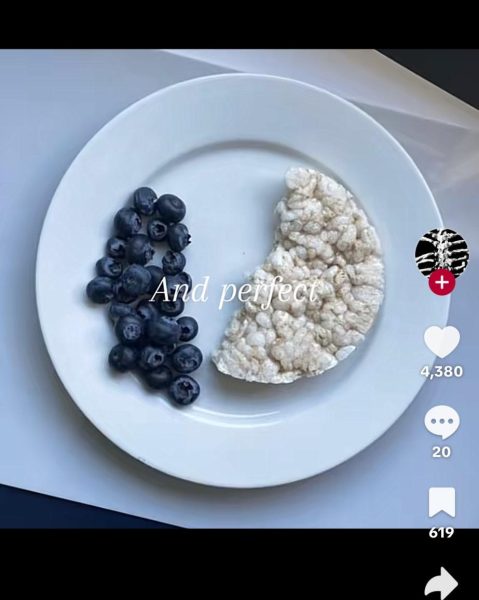
Some TikToks will have concerning quotes such as, “Guilt hurts more than hunger” above a small bowl of grapes and two hard-boiled eggs, a common calorie-strict meal. Others contain pictures of calorie-restricting meals, the size of which a toddler might eat.
Videos like these can very easily influence young audiences, making them feel more insecure about their bodies, possibly leading to starvation and bad habits such as bulimia.
Videos like this are scattered all over the internet with other quotes, such as, “Do it to not feel disgusted with your own body anymore.” This content for young audiences to see can be harmful. People are highly susceptible to social influence.
It’s important that we protect our youth from content like this to prevent serious eating disorders. But how can we do that?
“I mean, it’s really hard not to get sucked into that content, or feed into it because it can be hidden in ways you wouldn’t expect,” an Arcata High student stated. “Your favorite celebrity could post that content, and it could be hard to recognize sometimes or distinguish between harmful eating habits and healthy eating habits.”
It’s crucial to educate our youth on how detrimental eating disorders can be, the health risks that come with them, and how inefficient they are to the human body.
Many ways to prevent people from going down that path are with education and advising them to monitor their social media use. Other ways to recover from eating disorders can be hotlines and help from professionals. A contact for eating disorders is 1-866-662-1235.