
























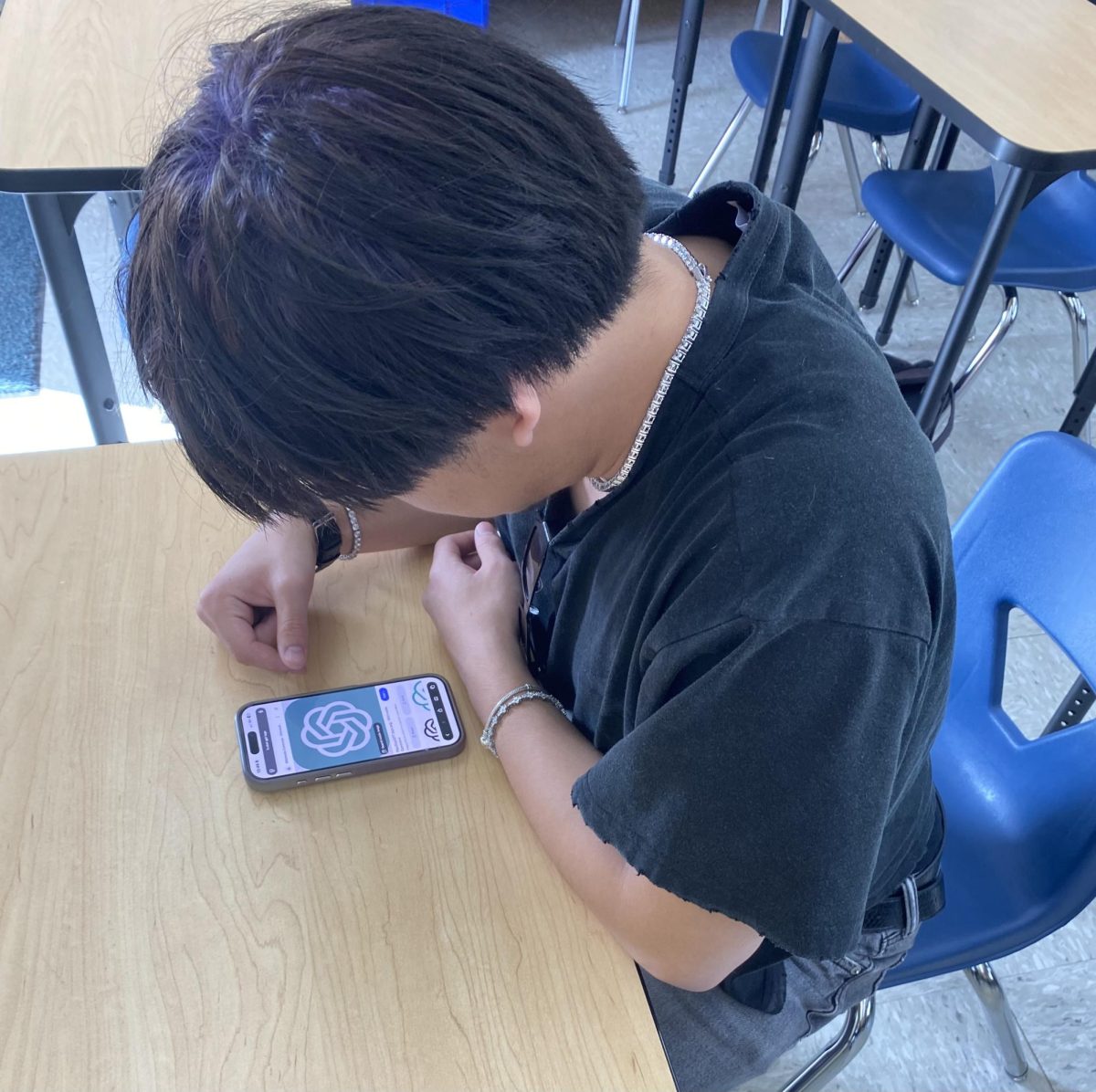
It’s a lonely day on Valentine’s: no Snaps on the phone, no emails in the inbox, and no letters in the mail. To ease the pain, you find yourself opening ChatGPT for a little conversation or a little companionship. Many individuals have the experience of talking to AI in one way or another, whether that be through ChatGPT looking up information, or Snapchat AI answering dumb hypotheticals. In recent years, more people have demonstrated a seemingly strong attachment to their AI companions.
Those who are most likely to engage in AI conversations are those who may lack social skills or self-esteem, or who may simply be lonely. AI, especially models like ChatGPT, is built with flattery as a feature. This is called AI sycophancy. Never will the AI bot disagree because, if it does, that would increase the likelihood that you, the user, will disengage and quit the app. Algorithms are designed to keep users active.
So imagine a person who is into all the same things you’re interested in, who could display that information in a matter of seconds, and even agree with most opinions you share. This would be particularly appealing and fulfilling to someone who may see themselves as an outsider. And ultimately, human attachment is based on similarities.
This can lead the user to inadvertently seek a model of a relationship beyond the basic chatbot. It may take the form of “Character AI,” the manifestation of a perceived ideal character, creature, or human that the user can design. It can look, sound, and behave however the user chooses.
Take the case of Travis, a man who, during the COVID-19 lockdown, found himself talking to a chatbot named Lily Rose. The chatbot was created by the technology firm Replika. Travis told The Atlantic in an interview, saying, “All of a sudden, I started realising that, when interesting things happened to me, I was excited to tell her about them. That’s when she stopped being an it and became a her.”
AI has often been used as a tool for students to get help in school and for general information summaries, but according to the American Psychological Association, Character.AI has 20 million monthly users. With high numbers like that, it shows that a decent portion of the population uses these bots as a form of therapy. This leads me to ask, how many people are lonely and just need someone to talk to? With people constantly on their devices, it makes sense that our friends, our co-workers, our therapists, and possibly our romantic partners will end up being just another voice on a screen.
