



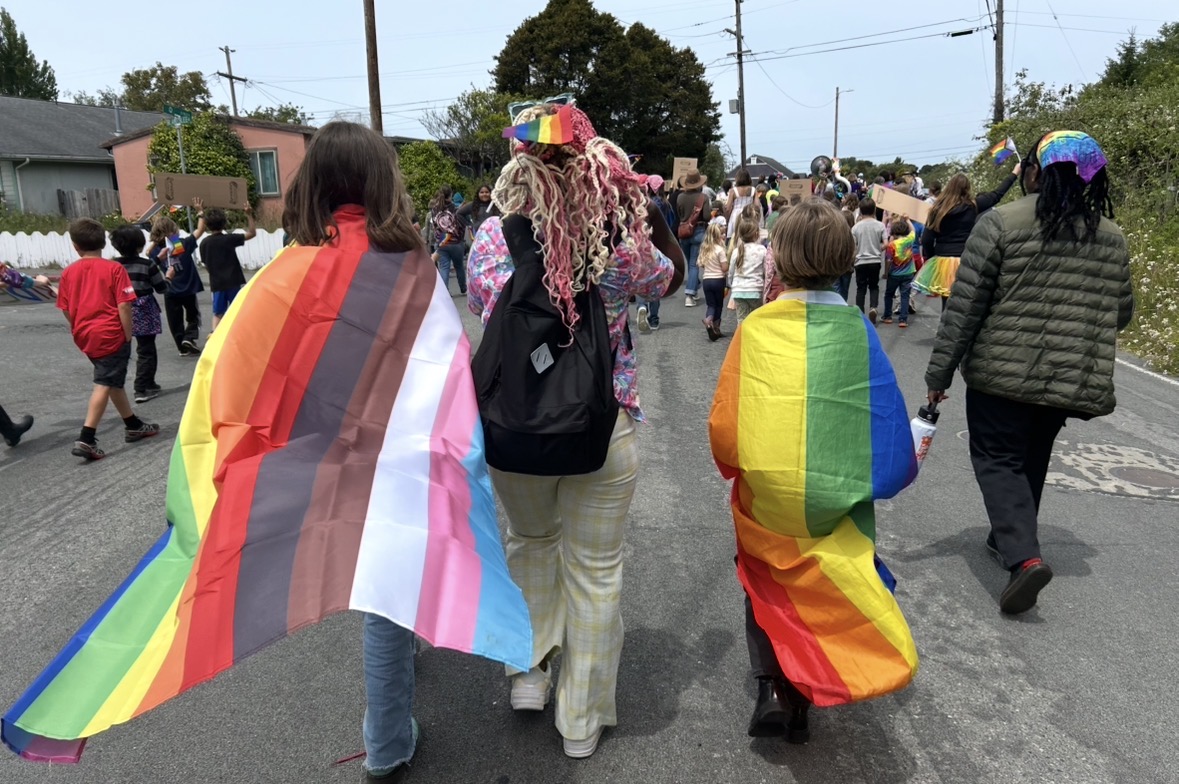












Practicing open and active communication with opposing opinions to yours is an incredibly valuable skill to develop, especially during these trying times of political unrest. Communication also plays a huge role in creating a nonviolent resistance.
Nonviolence and violence are a huge part of forming resistance. But throughout history, nonviolent revolutions have contributed to immense change in our society and American culture, more so than violent resistances have. Keep in mind that nonviolence doesn’t mean not defending yourself.
In the last issue, I proposed the question of what makes a good protest, or a successful resistance, in broader terms. One of the answers I received was being able to have open-ended dialogue with someone with whom you disagree. Active listening and connection open a door to awareness and understanding. If one wants to create a powerful resistance, one has to unify the people.
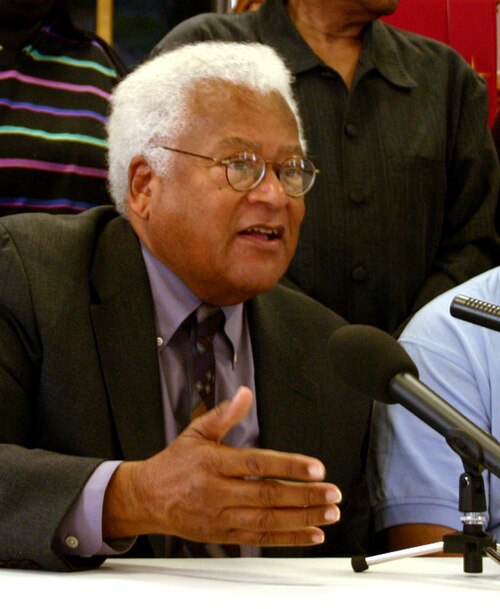
Revered, professor and activist James M. Lawson Jr. worked alongside Martin Luther King Jr. in the Civil Rights movement. After retiring from his position as a pastor at Holman United Methodist Church in Los Angeles, he taught his philosophies on nonviolence to colleges and communities across the U.S. through the James Lawson Institute.
“Nonviolent discipline is necessary because you cannot beat the enemy with the enemy’s theories and practices,” Lawson famously said, “You cannot do it.”
King and Lawson were staunch believers in practicing revolutionary nonviolence. They believed you can’t successfully form a movement uniting and protecting the people and our constitution, while in the process alienating those who don’t understand or disagree with the movement. This is why communication is key. Not only can it be a recruitment tool, but it also creates a sense of community as a whole. Discussion is needed for those who don’t see eye to eye.
Martin Luther King wrote in one of his first books in 1958, Stride toward Freedom: The Montgomery Story, “Nonviolence seeks results without seeking to humiliate or punish one’s opponent and directs its coercive power of mass protest and nonviolent resistance against forces of evil rather than against persons.” So, how do we start engaging in nonviolence through communication?
It may be difficult at first, but when you start to break down those barriers, you will find that common ground. All it takes is breaking away from that division. From this, we can spur growth for a movement.
Elle Penner, a local activist and signer with Harmonic Howl, a folk band that puts an emphasis on creating movement and empowerment through music, uses communication as a tool for resistance. “The way that I engage in conversation with people who disagree with me so strongly, personally, the approach that I use is to start by letting them talk. And when they talk, it starts helping me understand the main thrusts of their wishes are,” Penner said.
Listening to learn, having an open mind, active listening, and disagreeing without a screaming match help create community and understanding in a nonviolent movement.
History has proven, specifically throughout the black freedom movement/civil rights movement, that nonviolence plays a significant role in creating revolutionary change. Love and empathy always prevail against those with hateful and violent morals.
