


















Artificial Intelligence has rapidly integrated into day-to-day life.
AI evolved in ways previously unimaginable. Advancements in realism over the last five years have made AI-generated images increasingly difficult to identify. Previously, people could easily spot these images due to extra limbs and distorted features. This challenge even affects younger people who are familiar with artificial intelligence.
“I used to think I was pretty good at detecting [AI]. I try looking to see if something’s glossy or not, but it’s definitely gotten harder,” senior Sofia Flores said.
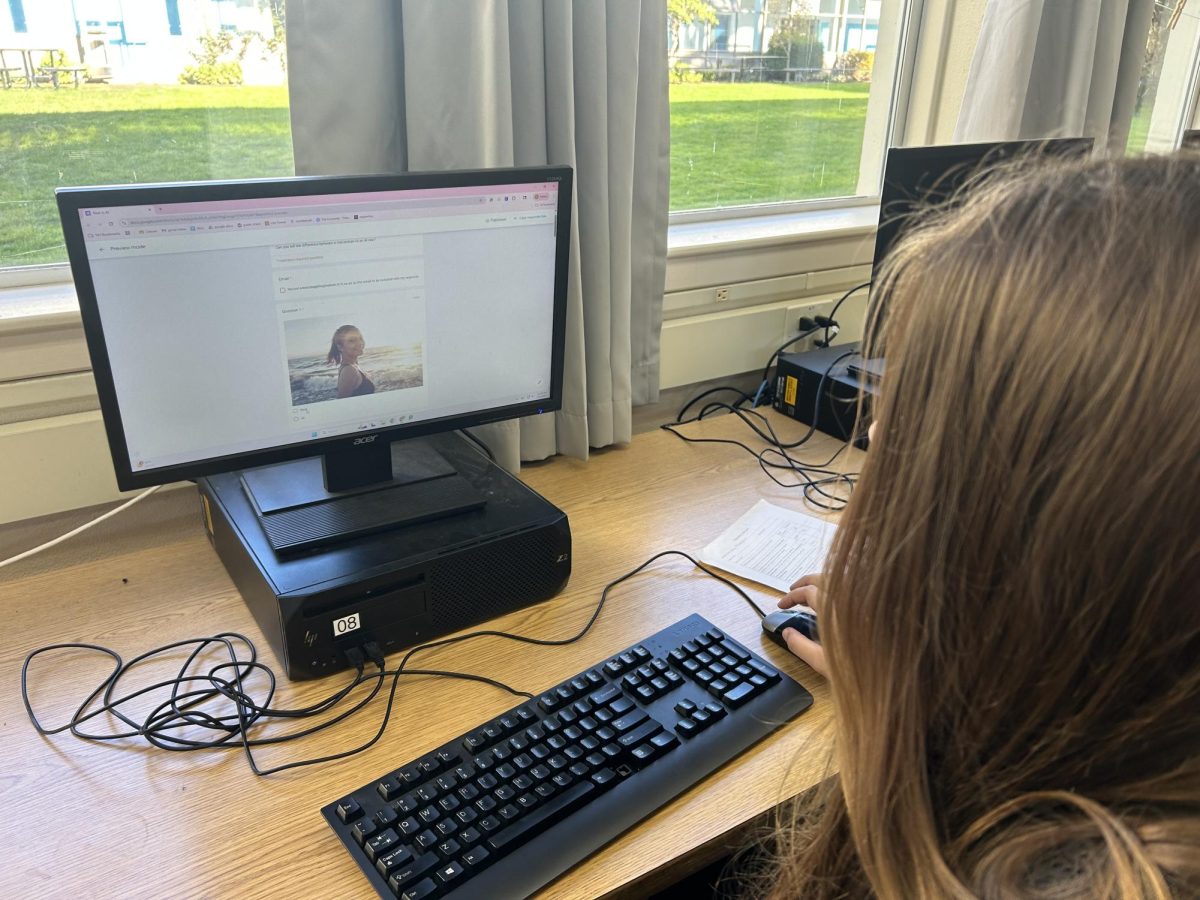
The average score for students in a “Real vs AI Image” test was 5.86/10 among 193 responses. Students use ranges of means to determine if the images were real, with responses of detailed methods, to guessing, to a simple “idk.”
While looking at images, sophomore Athena Harris watches “for aspects that are either really, really detailed or super muddled.”

Compared with students, teachers scored an average of 5.57/10 among 23 responses. The questionnaire challenges the belief that older people struggle to detect AI.
French teacher Davina Bagnall said, “There always seems to be something out of alignment.” She emphasizes her strong belief in being cautious about new media produced online. As a teacher, she uses AI to check vocabulary lists and letters for grammar issues. She generally keeps it in mind when looking at student work.
Students worry that teachers might mistake their hard work for AI-generated content in today’s world. It affects students in their schoolwork. Teachers may suspect essays and homework responses as AI-generated if they use academic language or punctuation. Punctuation, such as the correct usage of the “em dash,” or complex words, often raises flags for teachers.
“In school, I think about it while writing essays a lot. I always worry my work sounds AI. When I put [assignments] through a detector, some things were flagged, even though they weren’t AI,” Harris said.
The inconvenience of flagged schoolwork is a microscopic issue of the potential for what AI could transform into. The rapid development leads to concerning thoughts about what our future could be.
“I see it everywhere. Every app has it, and every website has some sort of AI chatbot, and of course, I see students use it,” senior Jacob Mola said. Mola said he frets about it evolving, “not only as a concept, but also economically. People are pouring so much money into a bubble that’s going to pop.”
Artificial Intelligence is budding quickly. The future of AI utilization is uncertain. It could lead to both positive and negative outcomes. Media literacy and the ability to detect AI in daily life are dwindling. Soon, it might just be impossible to detect.