



























Over the last couple of years, several new issues have arisen among teachers and students. People in the Arcata High community have expressed several concerns regarding the ability to teach, the ability to learn, and overall health concerns.
Comfort is important to the learning environment. It motivates students to learn.
Class sizes
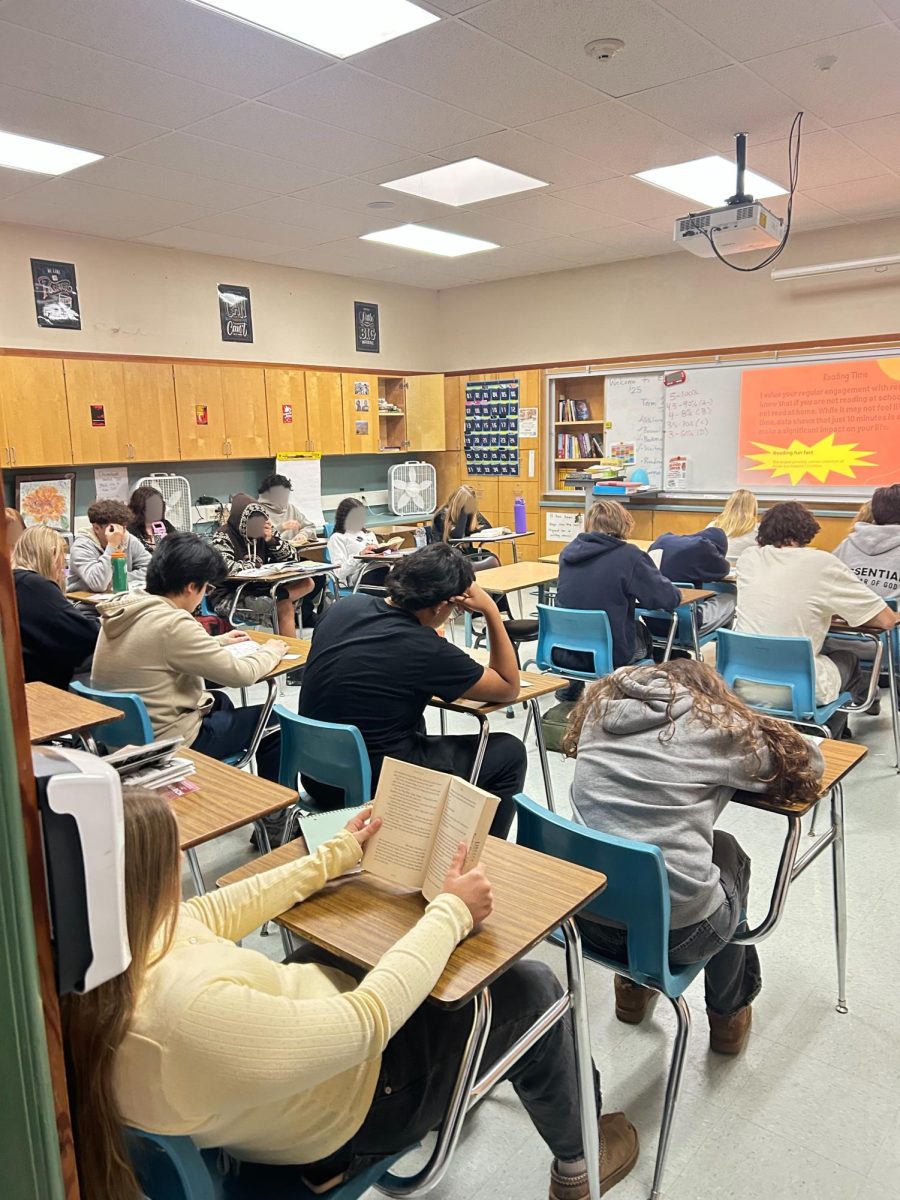
Teachers and students have concerns about the ability to function in larger classes.
Teacher Susan Clarke Luera said, “They really pack class sizes. Once you get bodies and backpacks in here, it is really hard to move around.”
An imbalance in class sizes has been frustrating teachers for years. They feel as though there is nothing they can do to support their increasing number of students.
Students feel the impact of being crammed into classrooms and are uncomfortable when they need to learn.
“There are lots of desks in [room 500], but the number of desks just did not match the students. Classes can’t fit, there’s not enough spots for everyone,” said senior Savannah Roth. The class Roth is referring to is her junior English class in room 500.
At the beginning of the year in room 500, English Teacher Isabel Farrell’s English 3CP class had a roster of 34 students. Her classroom, however, had only 32 desks.
“I have to rely on students switching out of my class. I just can’t accommodate them,” Farrell said.
There are several classes across campus with numbers reaching 33, 34, and 35 students per classroom. The same course in different periods has numbers in the 20s. Many of these classes are also required classes to graduate.
Senior Cypress Pulkkinen said, “When everybody’s close together, it just makes it harder to focus on one thing. It’s hard to get work done, and if I have to leave or do something, I have to climb over somebody or move desks to the side.”
Ventilation and carbon issues
As a direct result of high class sizes, high levels of carbon dioxide have been recorded. These levels of carbon are unhealthy to students and teachers.
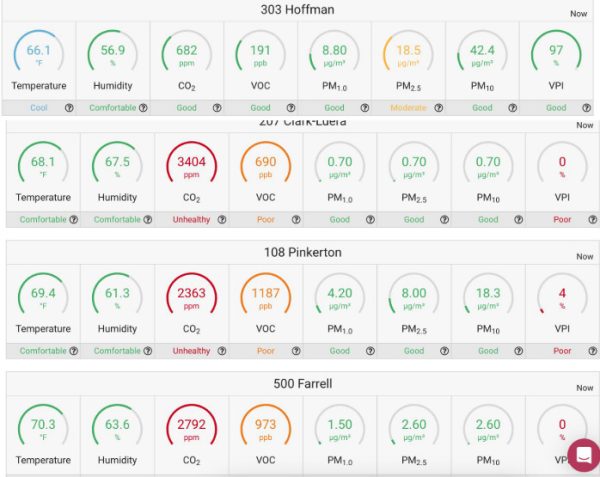
It is no secret that many classes on campus have awful air ventilation. Farrell has been monitoring the CO2 levels in her classroom and has reported that the carbon level gets to 1,200 units regularly.
“I am just self-monitoring. It starts okay in the mornings, but by the afternoon, it’s commonly above 1,200 [units], and the healthy level for indoor air quality is 800 units or less,” said Farrell.
These high levels of carbon have different contributing factors, such as a lack of airflow, poor ventilation, and a large number of bodies in the classrooms. Classrooms in the 500s wing are not the only classes feeling the effects of high carbon levels.
Clarke Luera has been teaching at Arcata High for decades. She found residence in room 206, which had the highest levels of carbon dioxide on campus recorded by former student Sierra Paliaga in a civics engagement project in Spring 2024. “It gets really hot to study, the air quality is so poor, people get really tired,” Clark Luera said.
Clarke Luera tries to keep the air flowing but finds it challenging to manage. The air vent starts on the other side of the building near room 200, takes air from outside, and circulates it throughout every classroom in the row. By the time it reaches room 206, it has been recycled through several different classrooms.
“I always keep the [air] filter on and keep the door open. I keep the windows open. I try to keep the air moving, but when there are so many bodies, you just can’t,” Clarke Luera said.
Some rooms on campus don’t have windows to open or any great way to circulate air. Paliaga documented a level of 2,792 ppm ( parts per million), 2,000 over the safe threshold.
Roth said, “The classroom was just very bad. There were no windows, so no fresh air. It gives you a headache, and it’s just really distracting. I dreaded going to that class every day.”
Poor ventilation doesn’t just cause carbon levels to skyrocket; the temperature inside classrooms does too.
Farrell said, “Pretty much the inside of room 500 mimics the outside temperature. If it is 75 outside, it’s 75 inside. It’s pretty much impossible to bring that temperature down. The physical environment is just not appropriate for anyone to be in.”
There have been efforts to try to improve ventilation in the 500s wing. Custodian Jim Hogan has put new ventilation fans in the classrooms. Hogan and the custodial staff are trying to alleviate those issues.
“The temperature is better now that outside temp has cooled off and there’s new ventilation, but it’s going to get hot again come spring. In the 500 wing, a lot of us have four fans running and the door open, but it just doesn’t regulate temperature,” said teacher Chris Shaw.
The temperature is only magnified in the 500 wings due to skylights in every classroom.
Farrell said, “The skylight is like a big magnifying glass. Right now, I am working on finding some sort of film to cover it in hopes of bringing the temperature down.
Teacher impact
Teachers have been facing the consequences of too large classes and a lack of ventilation for years.
Many teachers have expressed concern over simply not being able to help students individually anymore. An anonymous teacher said, “Logistically, for teachers it is harder to give [students] feedback if there are too many students.”
The teacher-to-student ratio in each class is very disproportionate among class periods. In some classes, like advanced placement and honors classes, teachers are finding it difficult to react to each student’s needs.
“There is a really big impact on the time you can spend with them, to dialogue individually. This is really harmful to my AP [Language and Composition] students. They need my time, and it impacts how much time I have to read and respond to their work,” said Clarke Luera.
Across the two periods of AP Language and Composition, the class rosters started as 24 in one period and 31 in the other. The class size now is 18 and 31, remaining wildly disproportionate.
“They pack our classrooms. Once you have the bodies and the backpacks, it is really hard to move and get around to students,” said Clarke Luera.
Student impact
Just as teachers, students are also facing the repercussions. With larger classes, some students are feeling a disconnect from their classes.
“My class was just so bad, I absolutely did not want to go in there every day. You had to climb over people and desks just to find your seat at the beginning of class, and it was even harder trying to leave,” said Roth about her experience in room 500.
Although on paper, a class size of 30, 26, 25, 21, and 31 does not seem large. In room 500, though, a room only about 700 sqft, it is cramped. Especially compared to different classes with 1,000 sqft, it impedes students’ ability to learn.
“We just can’t focus on even reading. It’s not the best environment to work in. It can be hard to breathe, and I have allergies, which makes it a lot worse. It just kind of disconnects you from what you’re doing,” said Pulkkinen.
Some teachers have also noticed differences over the years, comparing smaller to larger classes in terms of community. They have noticed a change in mental health and attitudes, partially attributed to these issues.
Unwillingness to speak in front of a room full of students is not just noticed in one classroom. Social anxiety is a big part of being a teenager, and it affects some students severely.
Clarke Luera said, “My students who are anxious have a really hard time in those big classes. If you’re suffering from social anxiety and you’re in a class of 35, it doesn’t really work. I can see they feel like they are suffocating. Kids are still figuring out tools to deal with panic, but you’re just not there yet.”
Solutions
Teachers made their concerns known to the admin and the school board for years. However, they feel as though their voices are not heard. Many teachers have come up with different possible solutions to the plethora of problems being faced.
It may seem like a dead end or an impossible fix, but it is not. Many different staff members have many different ideas on ways to use our grant and state funds.
A more costly solution would be to add more sections to departments of required classes, like English and history. This would mean adding more teachers and periods for classes, and reducing class sizes.
Some teachers want to prioritize putting in better ventilation in all classrooms. Putting in ventilations that pull outside air into each classroom would bring the unhealthy carbon levels down to the recommended amount.
Head of Maintenance John Reeves said, “ I am aware of the air quality concerns and have been actively working to improve things. There’s room for improvement and were committed to finding long-term solutions that make classrooms more comfortable and healthier for both students and staff.”
Carbon monitors are advocated for in each classroom. Especially in the colder months when doors and windows are more likely to be shut. Carbon monitors would make teachers and students aware of the air quality at the moment, so there can be efforts to change the environment.
For rooms in the 500s wing, windows facing the outside are not an option. Even for classrooms at the end of the halls, the structure of the building is not compatible with window installation. However, what about windows into the hallway?
“Windows facing the hallway would be nice. The hallway is like a big wind tunnel, maybe, if we had windows that opened towards it, some of that air would circulate the classroom,” Farrell said.
Some solutions may just be a quick fix or a timely project, but they are necessary to the function of classrooms across campus. It is essential to find solutions that help students and teachers alike.